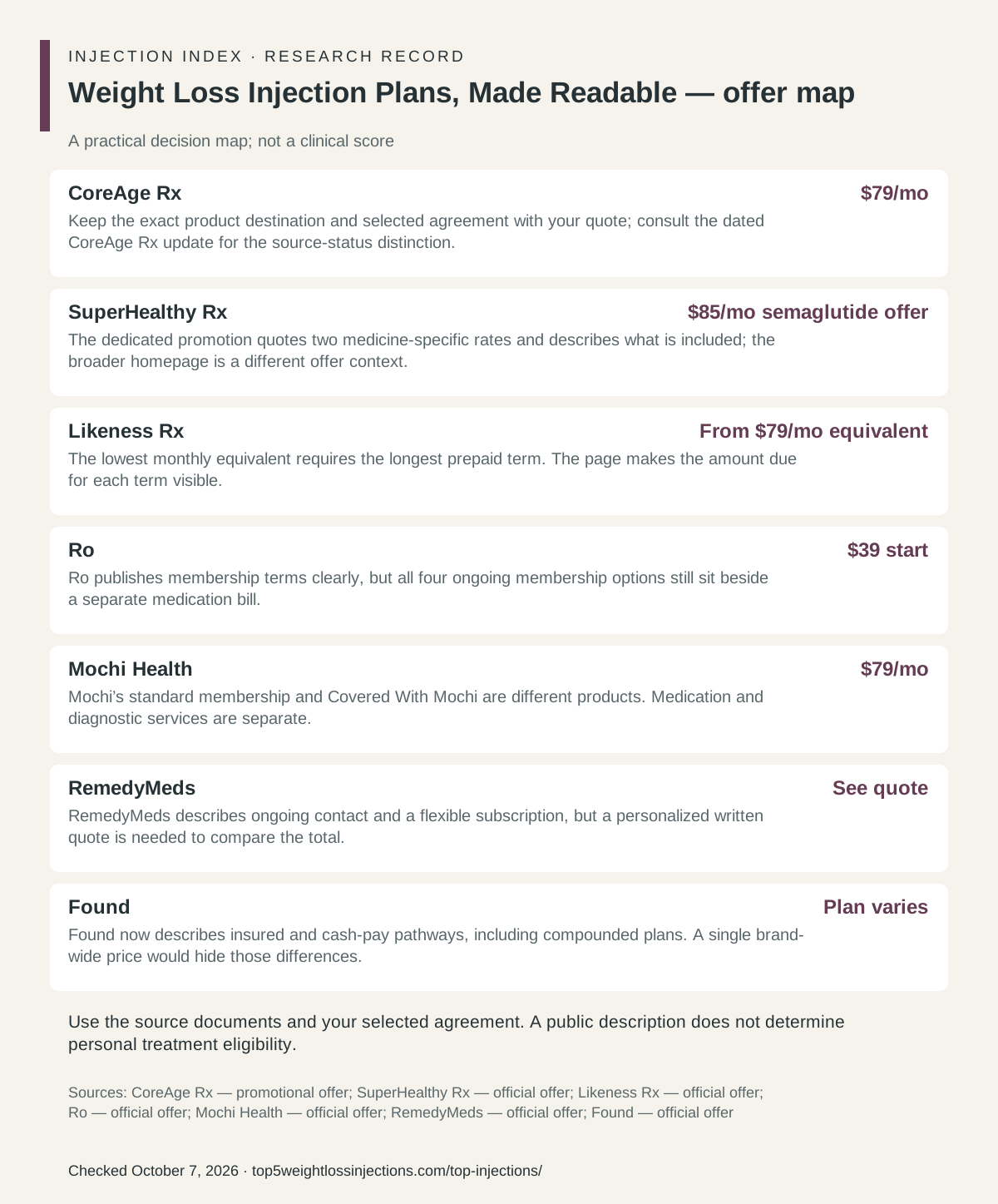
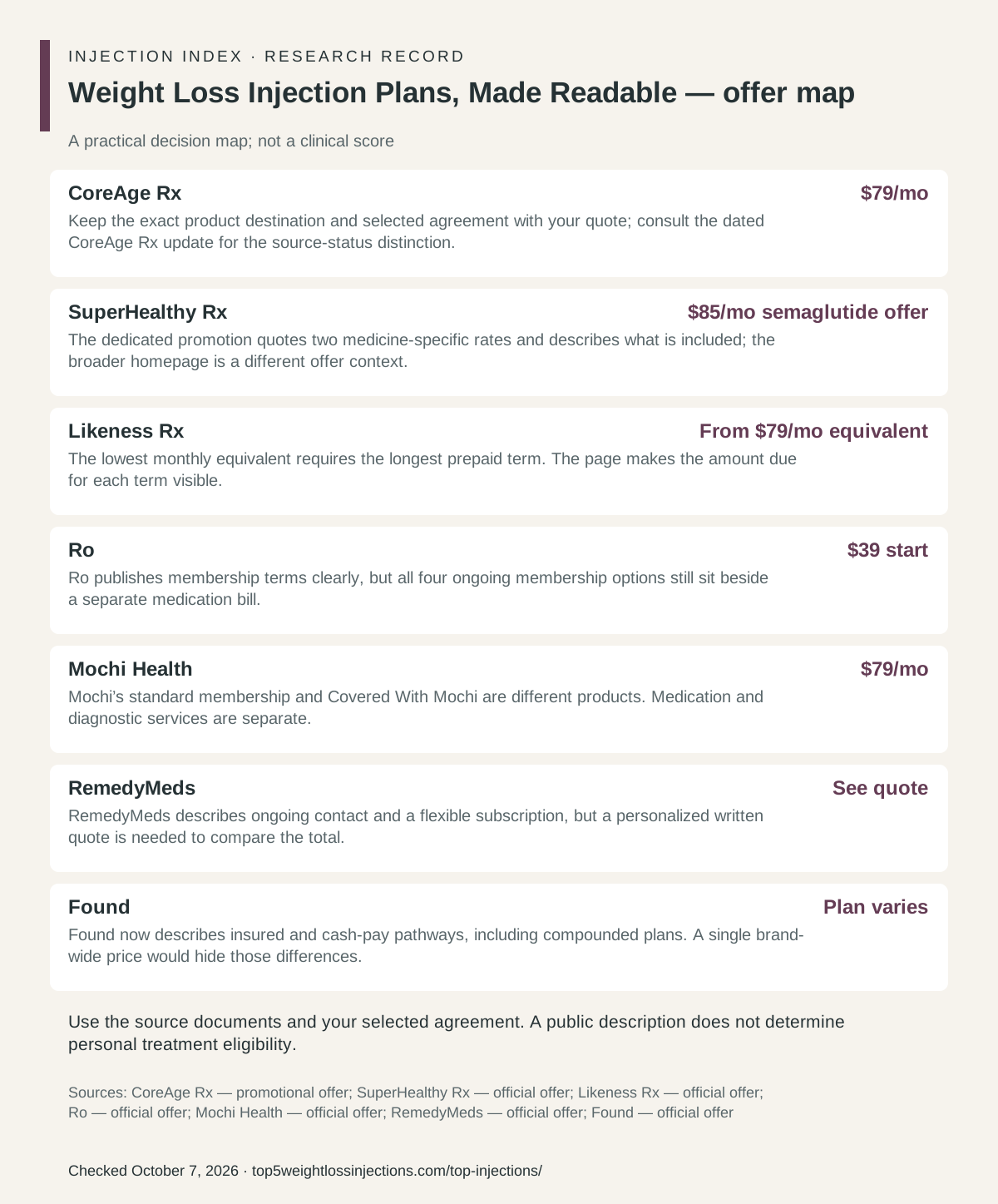
An online injection offer is easier to compare when three details stay together: the actual medicine, the complete invoice, and the continuing-care process. The entries below bring those details into one readable starting point. Open a review for the source information and the terms still needing confirmation.
Use this index to prepare questions rather than to choose a prescription by list order. A clinician must assess suitability, and the provider’s current agreement determines the purchase. A branded medicine and a compounded preparation have different approval status even when the ingredient names overlap.
Semaglutide $948/year ($79/mo equivalent) or $139 month-to-month; tirzepatide terms differ
Likeness Rx offers compounded semaglutide and tirzepatide with explicit term pricing. Its lowest advertised monthly equivalents are $79 and $129 on annual prepaid terms; month-to-month options cost more.
The seven entries on this page are different purchase models. CoreAge, SuperHealthy and Likeness describe specific compounded offers; Ro and Mochi add a care membership to a medication charge. RemedyMeds and Found require attention to the selected plan. Their positions do not establish a clinical hierarchy.
Use the review links to move from a headline to the actual commitment. Record the same four items for each candidate: the exact prescription, money due today, money due at renewal, and who handles clinical follow-up. A price that cannot yet fill those columns is an incomplete quote, not a zero-cost option.
Before you decide
Questions worth answering
Does the order on this page identify the best treatment for me?
No. It is a publisher-arranged comparison of selected public offers. The chart explains the specific purchase or evidence question; a licensed clinician must assess the actual treatment.
What should I verify for this comparison?
The first useful comparison is the kind of purchase: medicine-inclusive offer, care membership, or a quote that still needs completing. Ask for the selected written quote and the product-specific clinical explanation before making a purchase.
Evidence behind this page
Sources & chart notes
Source dates are listed with each document. Earlier research and later offer updates are identified separately. Provider pages establish advertised terms. Labels and trial reports describe specific medicines and study populations. Medical review has not been completed.
Weight Loss Injection Plans, Made Readable — keep the exact product identity and its complete label together.
Read the next invoice as well as the first one
A care membership, consultation, and medication-inclusive price purchase different things. Introductory promotions should be compared with their normal renewals and any longer commitment. Read the price guide before treating a low headline as a complete injection budget.
Read the next invoice as well as the first one — compare what the payment covers, when it renews and which charges remain separate.
Identify the medicine before paying
Ask for the product name, route, preparation, and dispensing pharmacy. For a compounded offer, the clinician should explain why an approved drug cannot meet your individual needs. The product guide explains the regulatory distinction without deciding the prescription for you.
Keep a route to clinical support
Find out how refill reviews occur and who handles medical questions between shipments. A billing desk and a prescribing team serve different functions. Use the clinical checklist and first-month guide to organize those practical details.
Keep a route to clinical support — keep the product information and the route for asking a question in the same comparison.
Original references are retained below. Later observations and their source dates are identified in the dated updates and research notes. Advertising describes an offer; it is not independent verification of treatment outcomes.