A new prescription plan creates practical tasks as well as clinical questions. The first month is a useful time to check that the product, directions, contact details, and billing schedule match what was agreed. It is not a reliable countdown to a specific amount of weight loss.
People respond differently, and a provider’s marketing timeline cannot predict your experience. Use the prescribing team’s instructions for the actual medicine and its follow-up. This checklist organizes the service details without supplying a dose schedule or replacing clinical guidance.
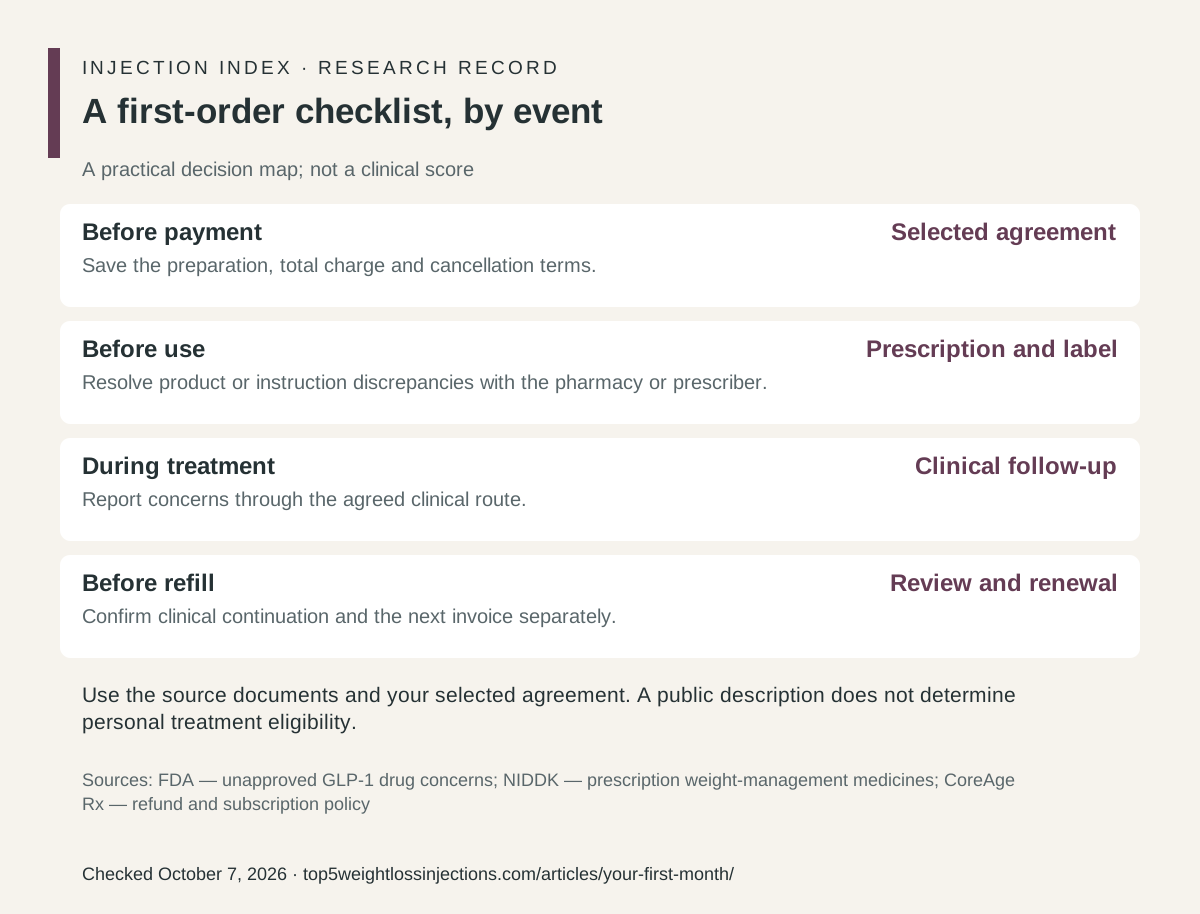
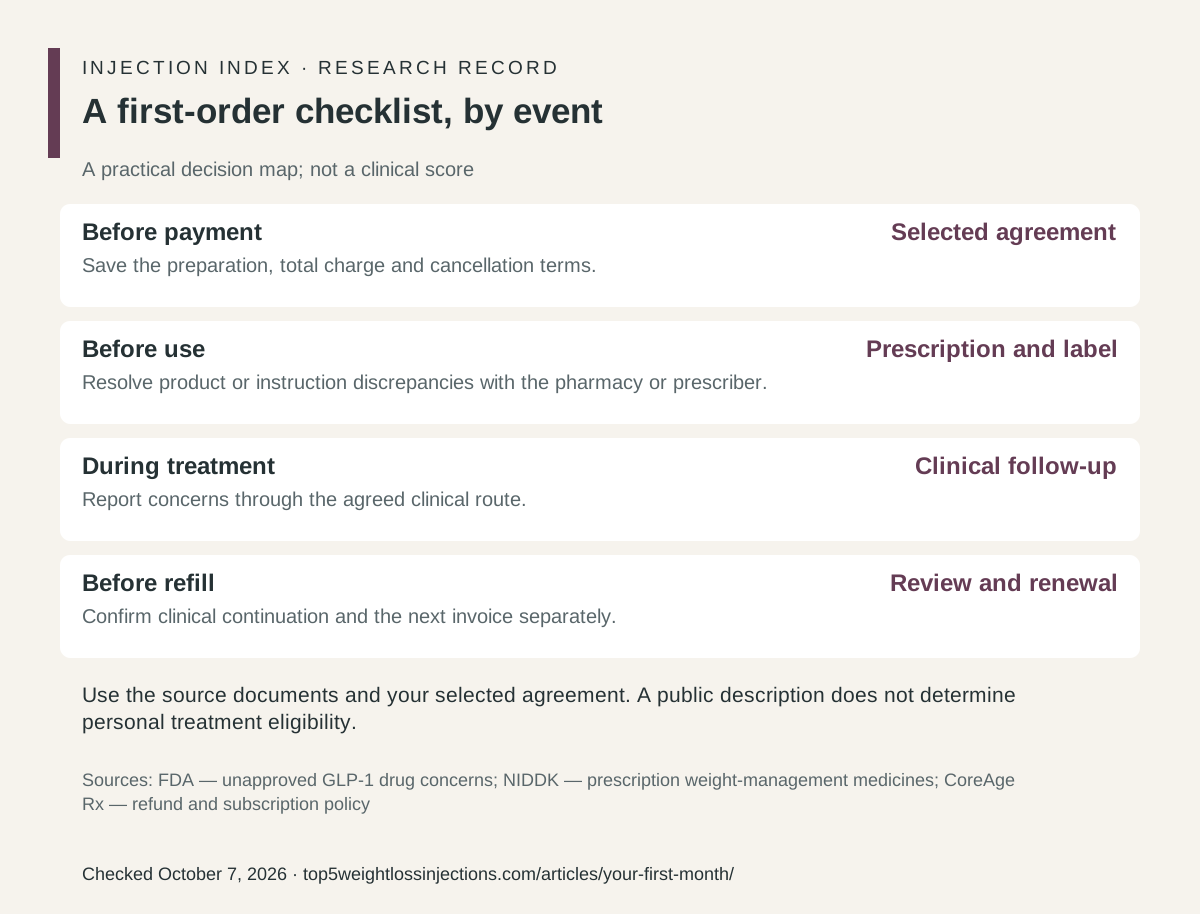
A first-order checklist, by event
A practical decision map; not a clinical score
- Before paymentSelected agreement
Save the preparation, total charge and cancellation terms.
- Before usePrescription and label
Resolve product or instruction discrepancies with the pharmacy or prescriber.
- During treatmentClinical follow-up
Report concerns through the agreed clinical route.
- Before refillReview and renewal
Confirm clinical continuation and the next invoice separately.
Use the source documents and your selected agreement. A public description does not determine personal treatment eligibility.
View the printable chart image
Delivery is a checkpoint, not the end of evaluation
Keep the packaging and pharmacy contact available until the label and storage instructions are understood. FDA has raised concerns about compounded GLP-1 shipments arriving warm or inadequately refrigerated. If a parcel raises a temperature or integrity question, contact the dispensing pharmacy before deciding whether it is suitable to use.
Follow the individual prescription rather than a website’s generic timeline. Concentrations and administration devices can differ. Do not calculate a new dose from another person’s syringe markings or assume that an old set of instructions applies to a different preparation. Have the pharmacist or prescriber resolve any ambiguity.
Questions worth answering
How should I use the chart on this page?
Use the source documents and your selected agreement. A public description does not determine personal treatment eligibility.
What should I keep after comparing my options?
Save the named product, the relevant source or agreement, the full payment and renewal details, and the clinician or pharmacy contact. Use the chart as an organizer for questions; it does not replace the selected contract or a medical assessment.
Sources & chart notes
Checked October 7, 2026. Provider pages establish advertised terms. Labels and trial reports describe specific medicines and study populations. Medical review has not been completed.
- FDA — unapproved GLP-1 drug concerns ↗FDA safety information
- NIDDK — prescription weight-management medicines ↗NIH patient information
- CoreAge Rx — refund and subscription policy ↗Provider policy

Before the order arrives
Keep the prescription and order summary accessible. Confirm the pharmacy and contact route, delivery arrangements, and any storage instructions that need preparation at home. Ask the provider what to do if the package is delayed or cannot be received as planned.
Note the upcoming clinical review and subscription renewal dates. If records, laboratory work, or an appointment remain outstanding, resolve those requirements with the team rather than assuming the order process will handle them automatically. See the order agreement guide for the different processing checkpoints.

When the medicine is delivered
Check the label and accompanying directions against the agreed prescription. The medication identity, concentration where applicable, and handling directions should be understandable. If the contents, packaging condition, or instructions raise a concern, contact the pharmacist or prescriber before use.
Do not derive a syringe amount from another person’s vial or an online review. FDA has reported compounded GLP-1 dosing errors. The product guide explains why different preparations can require different information even when the ingredient name appears similar.
During the treatment period
Use the contact and monitoring instructions provided by your clinical team. Keep the information they request for follow-up, and communicate new symptoms, changed medicines, or questions through the appropriate clinical route. A customer-service conversation about a bill is not a medical assessment.
Do not change the prescription, use someone else’s supplies, or interpret a slower-than-advertised result as a reason to follow an internet dose plan. Treatment decisions and concerns should be discussed with the prescriber. A comparison page cannot decide whether to continue or adjust a medicine.

Before the next invoice or refill
Confirm that the next charge and supply period match the agreement. Ask how refill suitability is assessed and whether an appointment or other information is required. If there is a planned change, resolve its impact on both the prescription and the order before processing.
The price guide can help organize the next payment, while the clinical checklist supports the review. A workable first month is defined by a clear care process, not by a guaranteed result from a provider comparison.
Use the offer details
Open the CoreAge Rx review, GLP-1 program index, and cost table to continue your comparison. Medical suitability should be discussed with a licensed clinician.
Documents used
Source register refreshed October 7, 2026. Advertising describes an offer; it is not independent verification of treatment outcomes.