Zepbound is a branded tirzepatide injection described on Lilly’s US manufacturer website. The page distinguishes weight management from a specific obstructive-sleep-apnea use and presents several product and support options. This is a medicine record, not a universal quote for an online clinic’s entire care package.
The useful review question is which product and indication a provider’s offer actually names. Current packaging, savings terms and professional care each have a different role. None should be inferred solely from a familiar brand name or an image of a pen.
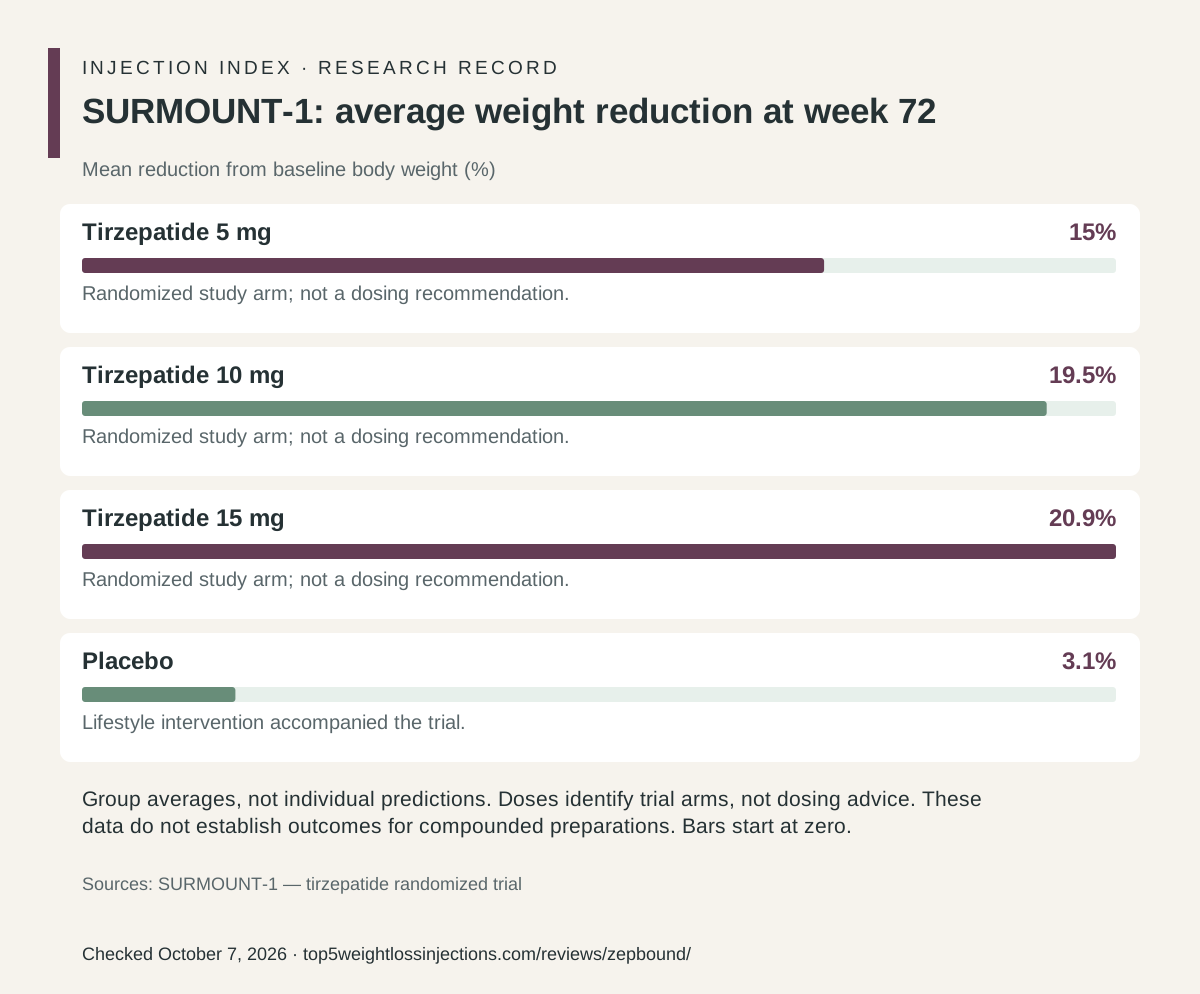
SURMOUNT-1: average weight reduction at week 72
Mean reduction from baseline body weight (%)
Group averages, not individual predictions. Doses identify trial arms, not dosing advice. These data do not establish outcomes for compounded preparations. Bars start at zero.
View the printable chart image
Keep the study population beside the percentages
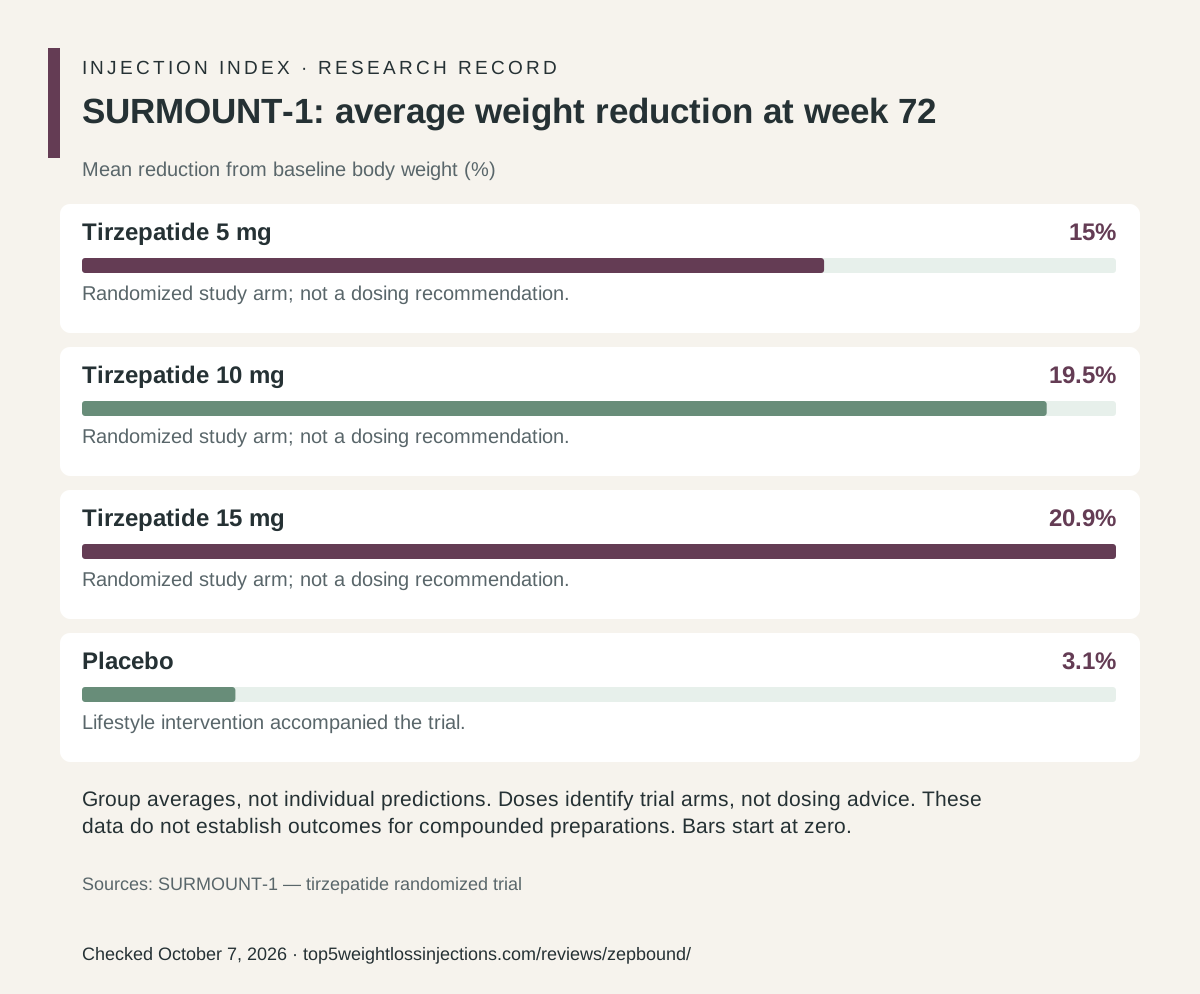
SURMOUNT-1 studied 2,539 adults with overweight or obesity, excluding diabetes, over 72 weeks. Average weight reductions were 15.0%, 19.5% and 20.9% in the three tirzepatide groups and 3.1% with placebo. The plotted doses identify study arms; they are not instructions for selecting a dose or escalating treatment.
A label can describe more than one indication and presentation. Zepbound’s current information includes weight management and obstructive sleep apnea in qualifying adults, alongside different injection presentations. The clinician should identify the indication and the package actually being prescribed.
Tolerability and interactions remain part of the comparison
The trial reported treatment discontinuation due to adverse events in 4.3%, 7.1% and 6.2% of the tirzepatide groups versus 2.6% with placebo. The current label also has specific contraception guidance after initiation and dose escalation. Review the full information with the prescriber; a weight-loss average cannot answer those individual questions.
Questions worth answering
What is the most useful detail to verify before choosing Zepbound?
Zepbound is branded tirzepatide with product-specific labeling. Its trial results do not establish outcomes for a telehealth service or a compounded substitute. Save the selected product name, payment or supply period, and the source or agreement that confirms it. A written record makes later changes easier to identify.
Does this review establish how much weight I would lose?
The chart reports the trial population and average endpoint described by the linked study. It is not a personal estimate. Clinical suitability, response, adverse effects and ongoing care require an individual assessment.
Sources & chart notes
Checked October 7, 2026. Provider pages establish advertised terms. Labels and trial reports describe specific medicines and study populations. Medical review has not been completed.
- Zepbound — official offer ↗Provider information
- Zepbound — current prescribing information ↗FDA-approved labeling
- SURMOUNT-1 — tirzepatide randomized trial ↗Randomized clinical trial
- NIDDK — prescription weight-management medicines ↗NIH patient information

The two use descriptions are specific
The manufacturer describes weight management for adults with obesity or some adults with overweight and weight-related medical problems. It separately discusses improvement of moderate-to-severe obstructive sleep apnea in adults with obesity. Both descriptions include a lifestyle context and should retain their stated populations.
That sleep-apnea use does not establish a general sleep benefit for everyone, and a weight-management description does not determine an individual’s eligibility. The conversation guide helps keep a reader’s concern separate from a prescribing decision. This review has not diagnosed either condition.

The current package and the actual price are separate
The page announces a single-patient KwikPen option and also depicts other Zepbound formats. Its self-pay statement includes terms, possible taxes and fees, and a prescription requirement. A package announcement is not an independently verified quote for every formulation or purchase route.
The manufacturer directs readers to coverage and savings information rather than supplying one total applicable to everyone. A telehealth provider can add a separate service cost. The cost guide distinguishes the selected medicine, savings eligibility and professional access.
Warnings and companion tools have different roles
The manufacturer includes thyroid-tumor warning information and limitations involving other tirzepatide or GLP-1 medicines. Those are part of the medicine’s safety record. This article is a review of public information, not the complete prescribing information or an instruction about how to use the product.
Lilly’s companion app is described as educational support and explicitly not a replacement for licensed professional treatment decisions. A convenient resource can complement the product record without becoming the clinician. The distinction also prevents an app feature from being mistaken for an independent medical assessment.

Do not substitute the active name for the branded product
A provider may advertise compounded tirzepatide while referring to Zepbound research. That is not the same finished-drug identity. FDA states that compounded GLP-1 medicines are not reviewed and approved as those branded products. The treatment guide follows this boundary.
The Wegovy review examines a different molecule and current forms, while AltRx lists several distinct medicine offers. Those records help explain why a menu, branded manufacturer page and clinical service need separate comparisons. They do not establish a clinical winner for the reader.
Compare another model
Trimi · Embody · CareBox · He & She MD
The invoice guide and product-status guide explain the distinctions behind these entries.
Documents used
Source register refreshed October 7, 2026. Advertising describes an offer; it is not independent verification of treatment outcomes.