A compounded GLP-1 offer can put a medicine name, low price, clinician access and a trial percentage into one short panel. Each detail can be useful, but they answer different questions. A clear reading keeps the actual preparation and the limits of each claim together.
This guide organizes the public offer rather than telling a reader which medicine to use. It does not establish personal eligibility, a pharmacy’s compliance or a treatment protocol. The aim is to make the documented features and unanswered questions understandable before they are mistaken for guarantees.
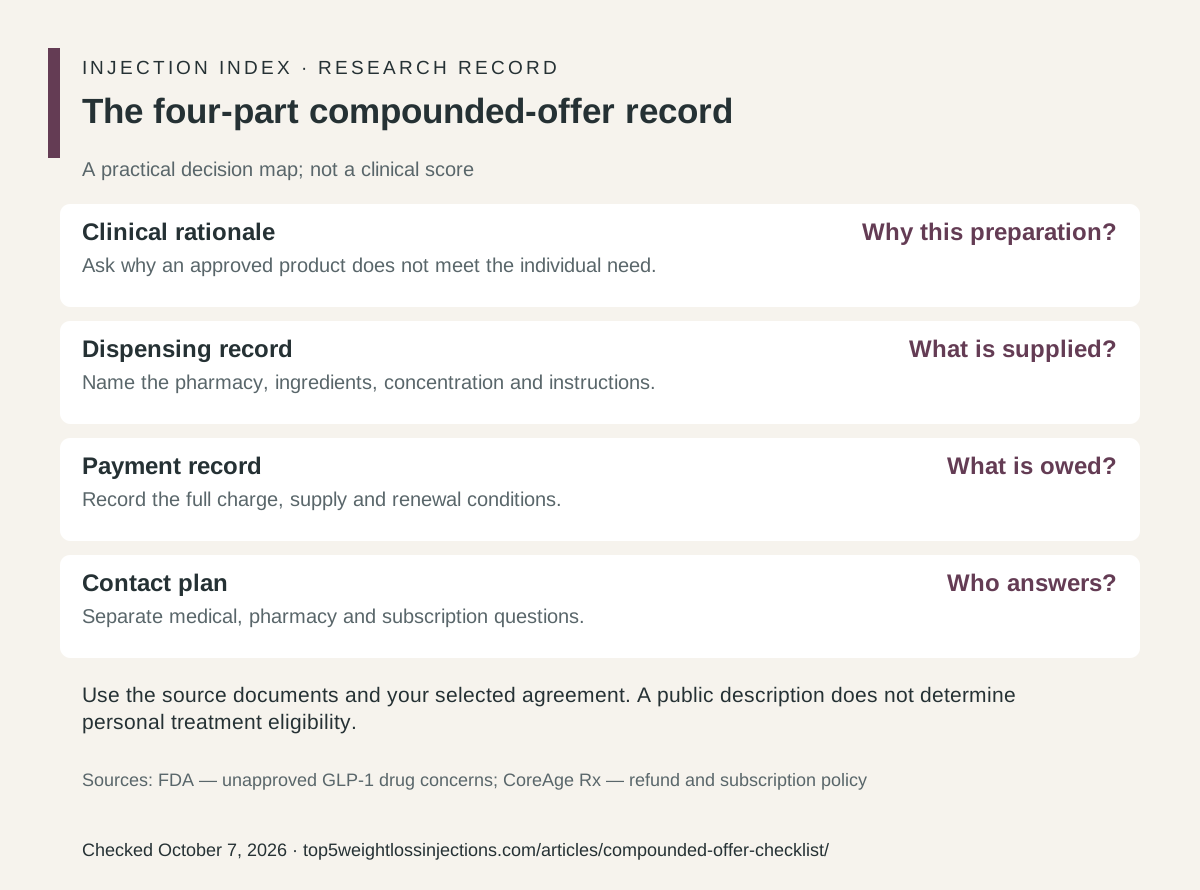
The four-part compounded-offer record
A practical decision map; not a clinical score
- Clinical rationaleWhy this preparation?
Ask why an approved product does not meet the individual need.
- Dispensing recordWhat is supplied?
Name the pharmacy, ingredients, concentration and instructions.
- Payment recordWhat is owed?
Record the full charge, supply and renewal conditions.
- Contact planWho answers?
Separate medical, pharmacy and subscription questions.
Use the source documents and your selected agreement. A public description does not determine personal treatment eligibility.
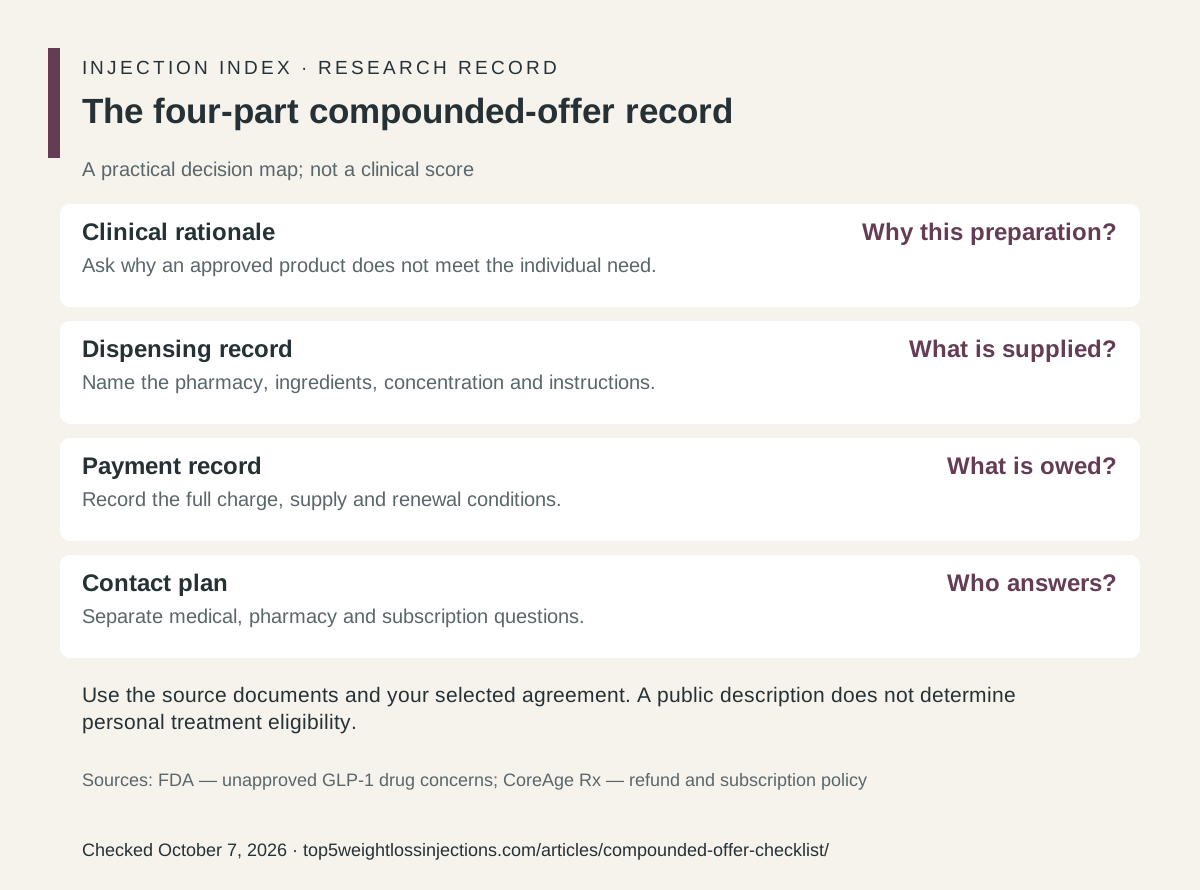
View the printable chart image
Missing information should remain visibly missing
If an offer does not identify a pharmacy or a full continuing charge, do not fill that gap with another provider’s arrangement. Request the information before committing to the order. A generic claim about licensed partners cannot identify the actual pharmacy responsible for a particular prescription.
FDA warns about dosing errors, unsuitable ingredient forms and misleading approval language in this category. Use those concerns to structure questions rather than attempting to make your own formulation or dose judgment. The clinician and pharmacist should resolve the actual instructions and preparation.
Questions worth answering
How should I use the chart on this page?
Use the source documents and your selected agreement. A public description does not determine personal treatment eligibility.
What should I keep after comparing my options?
Save the named product, the relevant source or agreement, the full payment and renewal details, and the clinician or pharmacy contact. Use the chart as an organizer for questions; it does not replace the selected contract or a medical assessment.
Sources & chart notes
Source dates are listed with each document. Earlier research and later offer updates are identified separately. Provider pages establish advertised terms. Labels and trial reports describe specific medicines and study populations. Medical review has not been completed.
- FDA — unapproved GLP-1 drug concerns ↗FDA safety information ·
- CoreAge Rx — refund and subscription policy ↗Provider policy ·
- NIDDK — prescription weight-management medicines ↗NIH patient information ·

Keep the actual preparation explicit
FDA says compounded GLP-1 drugs do not undergo the agency’s premarket review for safety, effectiveness and quality. A shared semaglutide or tirzepatide ingredient name does not make the compounded finished preparation the approved branded product. The treatment guide explains that distinction.
The exact form also matters. The TrimRx review retains inconsistent injection and oral wording rather than resolving it by assumption. A broad GLP-1 label is not enough to identify every product’s formulation, approval status or evidence. The missing identity should stay visible. The product name, form and pharmacy label should describe a coherent preparation rather than an assumed equivalent.

Separate the price from the entire commitment
A starting rate may cover a particular medicine, first term or longer commitment. The Enhance.MD review separates introductory and ongoing amounts. The Trimi review distinguishes annual monthly equivalents from upfront totals. Those are different financial qualifications, not interchangeable discounts.
Included care, supplies and shipping are positive features when the selected offer actually names them. A no-hidden-fees statement does not replace the full selected agreement. The payment guide makes the collection interval, continuing price and cancellation question easier to compare.
Name the prescriber and pharmacy roles
A service may arrange a clinical review without being the medical practice or dispensing pharmacy. The BetterMe Rx review follows its explicit platform disclaimer. The Brightmeds review keeps its medical and pharmacy partners separate from the website company.
FDA identifies screening, a prescription from a licensed professional and access to a doctor after receipt as important parts of the consumer context. This review does not authenticate an individual professional or batch. The contact guide helps distinguish the responsibilities behind an advertised bundle.

Keep outcome evidence and refund language distinct
A branded trial, a modeled graph, a self-reported program average and a paid testimonial are different records. Gala says its display models underlying trial data; AltRx discloses paid endorsers. Neither description should become an observed outcome for every compounded product or a forecast for the reader.
A money-back advertisement is another category again: a commercial policy with conditions, not clinical proof. The refund guide and review-scope guide retain those boundaries. A useful offer reading can recognize convenient access while leaving approval, individual response and unverified product details unresolved.
Compare the purchase and refill choices
Read Best injection programs by refill contact process and Best weight loss injection plans before bulk payment to put this guide beside specific provider models.
Use the offer details
Open the CoreAge Rx review, GLP-1 program index, and cost table to continue your comparison. Medical suitability should be discussed with a licensed clinician.
Documents used
Original references are retained below. Later observations and their source dates are identified in the dated updates and research notes. Advertising describes an offer; it is not independent verification of treatment outcomes.